

Soil To Success Presentation and Field Day. Building Healthier Soils for Better Farms: Insights from Francis Yeatman
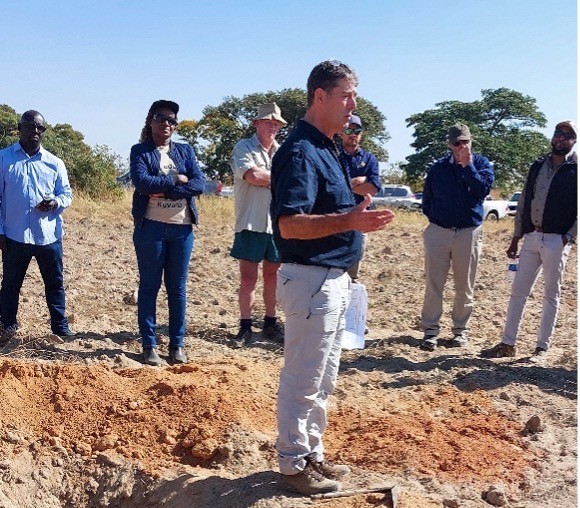
In June 2024, TLEAZ welcomed Francis Yeatman, CEO of OASIS Agri from KwaZulu Natal, to share his knowledge on the vital importance of soil health with our agronomy teams. This insightful presentation was followed by practical field visits to both a small-scale farm and a commercial farm, where our teams gained firsthand experience discussing soil health directly with Francis and reviewing soil test results.
Growing Stronger Soils and Profits
Francis Yeatman, drawing on his experience as both a farmer and a soil consultant, focuses on rebuilding soils for top productivity. His approach looks at the nutrients, biology, and physical condition of the soil. The main message was clear: by improving and maintaining soil health, farmers can grow more and earn more from their land.
With farming costs rising, farmers face more pressure than ever. Francis explained how using the right sustainability tools can help increase what you grow per hectare without harming the soil or its natural life. He emphasized that farmers should aim to “grow nitrogen” within their soil, which requires a complete plan.
Smart Strategies for Healthy and Profitable Farming
Francis highlighted key strategies to build farming systems that are both profitable and sustainable:
· Crop rotation: Changing the crops you grow in a field each season.
· Conservation tillage: Disturbing the soil as little as possible.
· Lower external farm inputs: Reducing the need for outside fertilizers and chemicals.
· Cover crops: Planting crops to protect and enrich the soil when the main crop isn’t growing.
· Integrated pest management: Using a mix of methods to control pests in a way that is safe for the environment.
· Integrating livestock: Bringing animals into the farming system to help with soil health.
Know Your Soil: The Key to Success
Before anything else, Francis stressed that farmers must understand their soil’s condition. This means checking for:
· Compaction: Is the soil too hard?
· Structure: How well are the soil particles clumped together?
· Moisture & infiltration: How well does the soil hold and absorb water?
· Temperature: What is the soil’s temperature?
· Type: What kind of soil do you have (e.g., sandy, clay)?
Francis explained the big difference between “living soil” and “dead soil.” Healthy, living soil, full of tiny living things (microbes), is essential for many reasons: it stores and filters water, helps nutrients move around, protects plants from disease, and even cleans up pollutants.
These tiny soil microbes are crucial for how nutrients like carbon, nitrogen, phosphorus, and sulfur move through the soil. They also help improve the soil’s structure, water balance, and gas exchange. Microbes need to be fed, so farmers must create a good home for them. Even tired soils have microbes waiting to be brought back to life!
Francis pointed out that measuring the bacteria and fungi in your soil is just as important as measuring the nutrients. He showed how increasing humus (organic matter) in the soil dramatically improves its ability to hold water. For example, soil with very little humus might hold only 80,000 litres of water per hectare, but with more humus, it could hold as much as 1.9 million litres! This is especially important for tobacco production.
Therefore, it’s vital to measure your soil’s water holding capacity and how quickly water soaks in.
Lessons from a Commercial Farm
During the visit to the commercial farm, key advice was shared:
· Take your own soil samples.
· Use satellite images to map different soil areas instead of traditional zig-zag methods.
· Use the right tool for the job, only when needed. Don’t subsoil if there’s no compaction – test your water infiltration first. Less disturbance to the soil is usually better.
· When choosing cover crops/green manures, know what you want to achieve. Whether it’s adding plant material, cleaning the soil, or feeding microbes, each crop has a purpose and a cost.
· Find the right seed supplier and avoid generic mixes. For example, with mustard, make sure you get the correct type (with the right isothiocyanate).
· Plant the right seed in the right place (depth) at the right time.
· Manage your cover crop for profit. It will produce nitrogen and microbes, saving you money on external inputs.